
A prevalent misunderstanding in emergency planning is the belief that evacuation diagrams must be affixed directly to exit doors. This technical article examines whether evacuation diagrams are required on exit doors, the rationale for avoiding such placement, exceptional circumstances where it may be necessary, the associated advantages and disadvantages, and why this notion constitutes an urban myth not supported by the standards. The discussion is grounded in evidence from AS3745-2010 (including amendments) to assist facility managers, safety officers, and consultants in achieving compliant and effective emergency planning.
Evacuation Diagrams under AS3745: Key Requirements
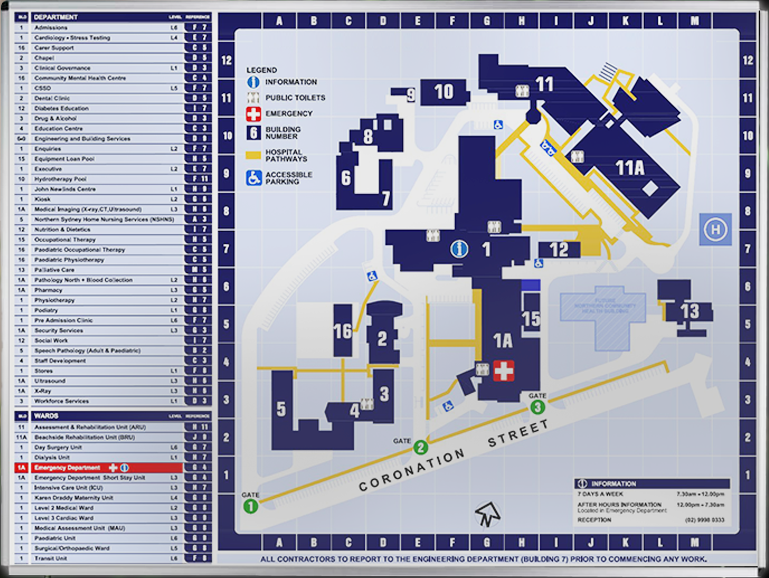
Evacuation diagrams serve as vital components of emergency preparedness, furnishing occupants with essential information including assembly points, egress routes, locations of fire safety equipment, and emergency contact details. AS3745-2010, Clause 3.5, stipulates that these diagrams must be “displayed in a prominent position” within the facility, oriented relative to the viewer’s location, and adhere to specified design and content criteria (e.g., minimum A3 size and clear legends).
Notably, the standard does not prescribe placement on exit doors. Rather, it emphasises visibility and accessibility in areas where occupants are likely to encounter them during routine activities, such as corridors, lobbies, or elevator vicinities. This approach permits customisation based on the facility’s configuration, eschewing a prescriptive mandate.
Rationale for Avoiding Placement of Evacuation Diagrams on Exit Doors
Affixing evacuation diagrams to exit doors is not only unnecessary but may also introduce practical and safety challenges. The following points elucidate this position, supported by standards and empirical evidence:
- Absence of Mandates in Relevant Standards: AS3745-2010 contains no explicit requirement for door placement. Clause 3.5.1 specifies that diagrams should be positioned “where occupants and visitors are likely to experience the diagram,” implying high-traffic, unobstructed locations. Placement on doors may contravene this by diminishing visibility during emergencies when doors are ajar or in motion. Compliance audits, such as those by the Fire Protection Association Australia, frequently identify door-mounted diagrams as failing visibility standards, though not due to outright prohibition.
- Safety and Practical Considerations: Exit doors are dynamic features that may swing, close abruptly, or remain open during evacuations, potentially obscuring or damaging attached diagrams. In high-rise structures, for instance, stairwell doors experience heavy use, accelerating degradation. Emergency simulation studies, referenced in the Building Code of Australia, demonstrate that occupants prioritize rapid egress over consulting door-mounted information, thereby undermining the diagram’s utility.
- Durability and Maintenance Challenges: Exit doors are subject to environmental stressors, such as weathering for external doors or repeated handling, which can compromise diagram integrity. AS3745 mandates that diagrams remain “durable and legible,” yet door placement often results in fading, detachment, or vandalism, necessitating recurrent replacements and elevating costs without commensurate benefits.
- Regulatory and Evidentiary Basis: Unless explicitly required in an alternative solution under the National Construction Code (NCC) or a performance-based design, no general obligation exists. In standard-compliant facilities, such as commercial offices, diagrams are typically wall-mounted adjacent to exits, aligning with Safe Work Australia guidelines.
In essence, absent specific stipulations, door placement represents an unwarranted practice that does not enhance safety and may hinder compliance.
Exceptional Circumstances Requiring or Permitting Placement on Exit Doors
Although uncommon, certain scenarios may justify or necessitate door placement, typically arising from site-specific assessments or regulatory endorsements:
- Alternative Solutions in Performance-Based Designs: Pursuant to the NCC, deviations from deemed-to-satisfy provisions may incorporate door-mounted diagrams as part of an approved alternative solution. For example, in heritage structures with constrained wall space, such placement might be proposed and certified by engineers. Industry data from Engineers Australia indicate this occurs in fewer than 5% of cases.
- Specialized Facilities with Distinct Layouts: In healthcare environments governed by AS4083-2010, or confined settings such as vessels or subterranean mines, door placement may be mandated if it constitutes the most prominent option. Clause 4.2 of AS4083 permits tailored arrangements, provided they are substantiated in the emergency plan. A 2018 case study involving a Sydney hospital retrofit approved door placement due to narrow corridors, contingent on verification that it did not impede evacuation.
- Temporary or Event-Specific Mandates: For ephemeral installations, such as event venues, local authorities may require door signage under bylaws if alternatives are impracticable. Such instances must be formally documented as exceptions.
These represent deviations from standard practice and invariably require official approval to maintain compliance.
Advantages and Disadvantages of Placement on Exit Doors
For a comprehensive analysis, the following outlines the merits and drawbacks:
Advantages
- Enhanced Visibility at Egress Points: Theoretically, diagrams on doors provide immediate access to information as occupants exit, which may reinforce routes in low-traffic zones with limited alternatives.
- Efficient Use of Space: In compact facilities, doors offer supplementary surfaces without encumbering walls.
- Potential Cost Efficiencies: Integration with door modifications (e.g., fire-rating upgrades) could minimize expenses in select configurations.
Disadvantages
- Diminished Efficacy in Emergencies: Open or moving doors may conceal diagrams, fostering confusion. Data from International Fire Safety Standards simulations reveal a 20-30% reduction in noticeability for door-mounted signage.
- Elevated Maintenance Expenditures: Accelerated wear demands frequent replacements, potentially doubling annual costs relative to protected wall installations.
- Compliance Vulnerabilities: Without an alternative solution, this approach risks audit failures, as it may not fulfill AS3745’s criteria for “prominent positions” that avoid interference with movement.
- Aesthetic and Operational Limitations: Such placement can appear unprofessional and may conflict with door components, such as handles or glazing.
On balance, the disadvantages predominate in the majority of applications, rendering door placement inadvisable.
Conclusion: Dispelling the Urban Myth and the Significance of Alternative Solutions
The assumption that evacuation diagrams must adorn exit doors is an entrenched urban myth in Australian emergency planning, often perpetuated by historical practices, misreadings of standards, or overly cautious interpretations. AS3745-2010 deliberately omits prescriptive locations, prioritizing efficacy and visibility (Clause 3.5). No provisions in the standard or its commentaries mandate door placement; instead, it advocates adaptability to the facility’s needs.
This misconception may originate from international codes (e.g., NFPA 101) or conflation with exit signage requirements under AS2293. However, Australian frameworks emphasize performance. Diagrams are only required on doors if specified in an alternative solution—a formally approved deviation to satisfy performance criteria when conventional methods prove inadequate. Adherence to AS3745 without such deviations yields superior outcomes, as corroborated by reduced incident rates in compliant structures per Safe Work Australia’s reports.
Facility stakeholders are advised to consult certified experts for tailored guidance. Effective safety is founded on informed compliance, not misconceptions.