
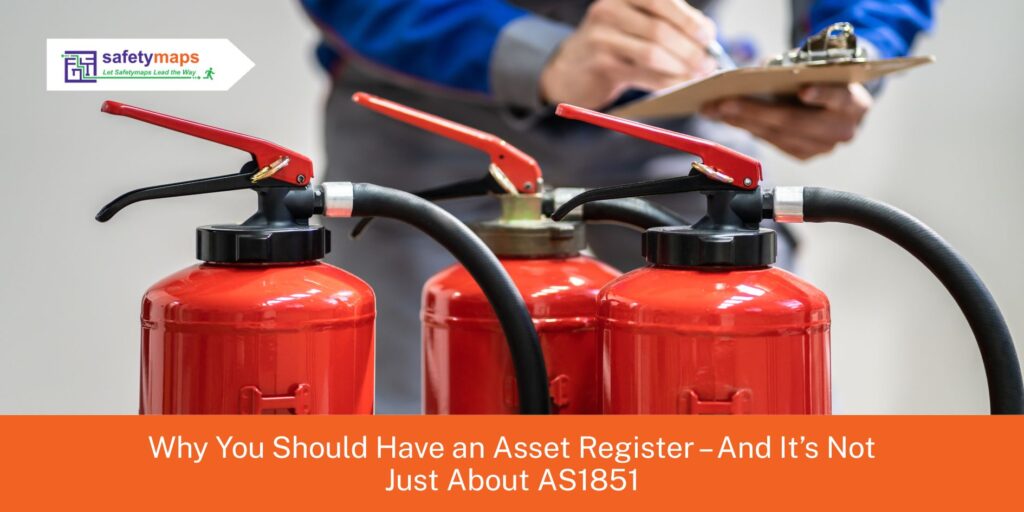
Maintaining an asset is a fundamental part of managing fire safety and compliance within any business or facility. While many people associate asset registers solely with AS1851 – the Australian Standard for routine service of fire protection systems and equipment – the benefits of having a wellained, self-managed asset register go far beyond regulatory compliance.
In this blog, we’ll explore why an asset register is essential, the advantages of managing your own register instead of relying solely on your fire protection provider, and how Safety Maps’ new product, Fire Safety Data, can give you an independent and reliable source of truth for your fire safety assets.
What Is an Asset Register and Why Is It Important?
An asset register is a detailed of all your fire safety equipment and systems, including fire extinguishers, sprinkler systems, fire alarms, emergency lighting, and more. It typically includes information such as:
- Location of each asset
- Manufacture and model details
- Installation and maintenance dates
- Inspection and service history
- Compliance status
The Requirement Under AS1851
AS1851 – Routine service of fire protection systems and equipment – outlines the minimum requirements for maintaining fire safety assets. Keeping an accurate asset register is key to ensuring your fire protection systems are serviced and inspected on time, functioning correctly, and compliant with relevant legislation such as the Work Health and (WHS) Regulations.
While AS1851 sets out these requirements, it does not prescribe who must maintain the asset register or how it should be managed. This is where many businesses rely heavily on their fire protection contractors.
Why Self-Managing Your Asset Register Matters
Many businesses engage fire protection companies manage the servicing and maintenance of their fire safety assets. These companies often provide an asset as part of their service package. While most protection companies are reputable and deliver excellent service, there are important reasons to maintain your own asset register.
1. Greater Control and Transparency
When you manage your own asset register you direct control over the information. This means you can:
- Verify that all assets are recorded accurately
- Monitor the servicing and inspection schedule
- Identify any gaps or overdue maintenance
- Ensure compliance with your organisation’s specific safety policies
2. “Trust, But Verify” Approach
The saying “trust, but verify” is especially relevant in safety compliance. While fire protection companies are generally trustworthy, having an independent record allows you to cross-check their reports and service histories. This can help you:
- Detect any missed services or errors early
- Avoid complacency or-reliance on a single provider
- Maintain a complete audit trail for regulatory inspections
3. Improved Risk ManagementA
self-managed asset register helps you proactively manage fire safety risks by:
- Highlighting assets approaching end-of-life or requiring upgrade
- Planning maintenance budgets effectively
- Ensuring emergency preparedness is up to date
4. Compliance Beyond AS1851
asset register supports compliance beyond just AS1851. It can help satisfy requirements under:
- Work Health and Safety (WHS) Regulations
- Building Codes and Fire Safety Acts
- Insurance policies requiring documented fire safety maintenance
Having your own register provides a comprehensive safety management tool, not a servicing log.
Challenges of Letting Your Fire Protection Company Run the Asset Register
While fire protection companies play a critical role, outsourcing asset register management entirely can have drawbacks:
- Limited Visibility: You may not see real-time updates or full details without requesting reports.
- Data Ownership: The asset information is held by a third party, which can complicate access or transfer if you change providers.
- Potential for Errors: Relying on one increases risk if data entry mistakes or omissions occur.
- **Less Flexibility You may not able to customise reports or track additional data relevant to your organisation.
Fire Safety Data: Your Independent Source of Truth
At Safety Maps, we understand the importance of having a reliable, independent asset register you can trust. That’s why we developed Fire Safety Data – a purpose-built asset register management tool designed to give you complete control and transparency over your fire safety assets.
Key Features of Fire Safety Data
- Easy Data Entry and Updates: Manage your assets in a user-friendly platform accessible anytime.
- Automated Reminders: Never miss inspections or maintenance with built-in alerts.
- Comprehensive Reporting: Generate compliance reports tailored for audits and regulators.
- Independent and Vendor-Neutral: Your data belongs to you, not tied to any specific service provider.
- Integration Capabilities: Works with your existing safety management systems for seamless operation.
With Fire Safety Data, you gain an accurate, up-to-date, and independent record of your fire protection assets. This empowers you to verify service provider work, maintain compliance, and ultimately enhance your workplace safety.
Key Takeaways
- An asset register is essential for fire safety compliance and risk management, extending well beyond AS1851 requirements.
- Managing your own asset register provides greater control, transparency, and confidence in your fire protection program.
- While fire protection companies are generally reputable, the principle of “trust, but verify” supports having an independent record.
- Outsourcing asset register management entirely to contractors can limit your visibility and control.