
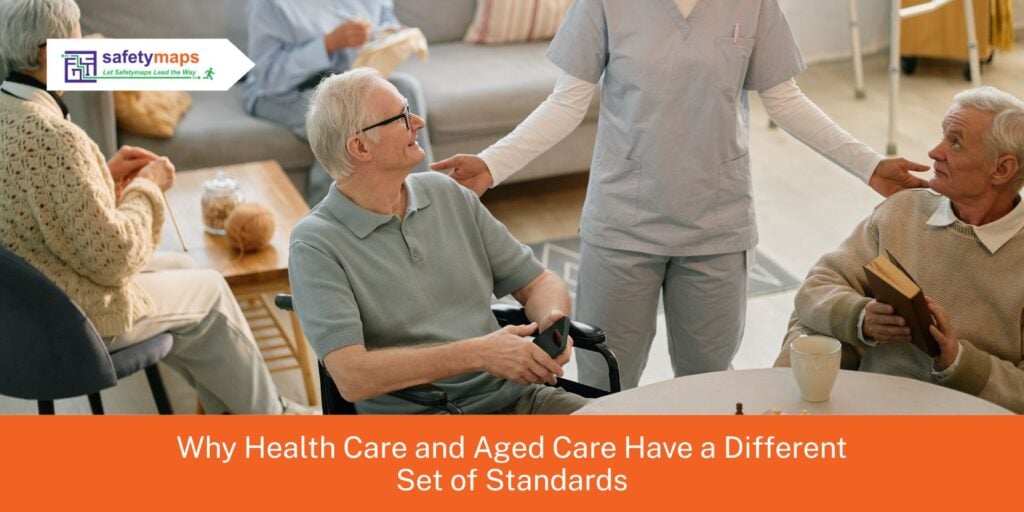
Emergency planning and evacuation procedures are critical components of safety compliance in any building. However, when it comes to health care and aged care facilities, the approach to emergency response must be fundamentally different from that used in typical commercial buildings. The unique needs of residents, patients, and staff demand specialised knowledge, experience, and compliance with distinct Australian Standards.
In this article, we explore why health care and aged care require a bespoke evacuation consultancy, the mindset differences in emergency response, and how Safety Maps’ expertise sets us apart in delivering tailored, compliant, and practical safety solutions.
Understanding the Unique Challenges in Health Care and Aged Care Emergency Planning
The Different Mindset: Commercial Buildings vs Aged and Health Care Facilities
In commercial buildings, emergency response plans typically assume that occupants are ambulant, able to understand evacuation instructions, and can independently move to safety. Evacuation diagrams and procedures are designed with this premise, focusing on efficient egress routes and assembly points.
In contrast, health care and aged care facilities care for individuals who may have:
- Limited mobility or non-ambulatory conditions
- Cognitive impairment such as dementia or Alzheimer’s disease
- Sensory disabilities (hearing or vision impairments)
- Complex medical needs that require assistance during evacuation
This fundamental difference means that emergency response cannot simply rely on the traditional “get out quickly” approach. Instead, it demands a carefully tailored strategy that prioritises safety, dignity, and the specific needs of vulnerable occupants.
Person-Centred Management and Compliance
Managing people with disabilities, dementia, or other impairments during an emergency requires sensitivity, respect, and inclusivity. Emergency plans must be:
- Person-centred: Recognising the abilities and limitations of each individual and planning evacuation accordingly.
- Non-discriminatory: Ensuring that all occupants receive equal protection and are not disadvantaged by their condition.
- Dignified: Preserving the dignity and privacy of residents during an emergency.
- Collaborative: Involving caregivers, staff, and emergency services to ensure a coordinated support approach that aligns with the Disability Discrimination Act 1992 (Cth) and supports best practice emergency management.
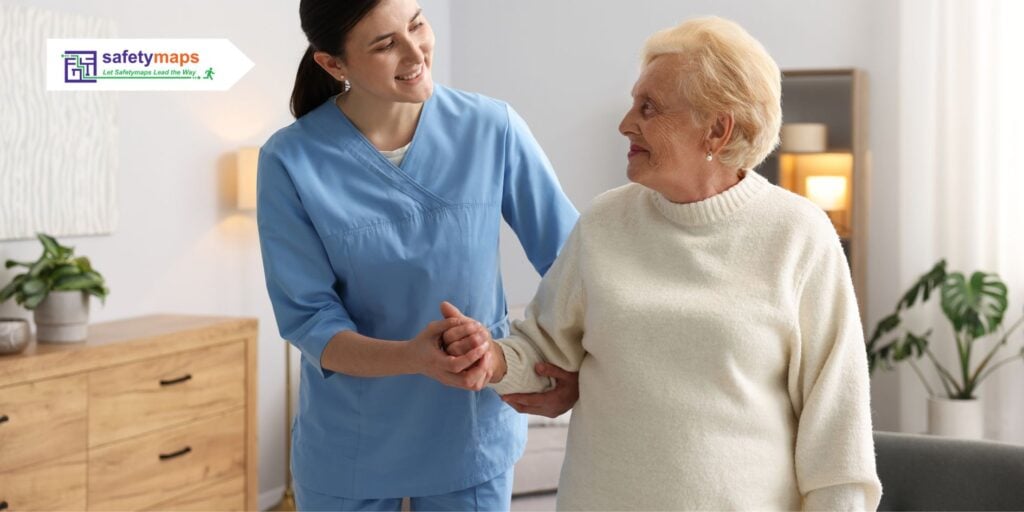
Why Specialist Evacuation Consultancy Is Essential in Health and Aged Care
Experience and Expertise Beyond Basic Plans
Aged care and health care emergency planning is a specialised field requiring deep knowledge of:
- Australian Standard AS 4083-2010 – Planning for emergencies in facilities that provide health care and/or aged care services.
- Personal Emergency Evacuation Plans (PEEPs) – Individualised evacuation strategies for occupants with disabilities or mobility challenges.
- Clinical and operational considerations: Understanding the facility’s medical and support needs during an emergency.
- Staff training and competency: Ensuring caregivers understand their roles in evacuation and emergency response.
- Legislative and regulatory compliance: Meeting requirements of the WHS Act 2011 (Work Health and Safety Act) and state-based health regulations.
Generic emergency consultants often lack this depth of experience, potentially risking non- compliance or unsafe evacuation processes.
The Role of PEEP in Emergency Planning
Personal Emergency Evacuation Plans (PEEPs) are a critical component in health and aged care emergency management. A PEEP:
- Details how an individual resident or patient will be assisted to evacuate safely.
- Includes information on mobility, communication needs, and preferred evacuation routes.
- Is developed collaboratively with the individual, carers, and emergency planners.
- Is regularly reviewed and updated to reflect changing needs.
Effective PEEP development requires detailed knowledge of the facility layout, occupant needs, and emergency procedures, which only specialist consultants can provide.
Key Differences in Emergency Planning for Health and Aged Care
| Aspect | Commercial Buildings | Health and Aged Care Facilities |
|---|---|---|
| Occupant Mobility | Generally ambulant | Non-ambulant or limited mobility individuals |
| Cognitive Ability | Assumed able to follow instructions | Includes residents with dementia or cognitive impairments |
| Evacuation Speed | Priority on rapid evacuation | Prioritise safe, assisted evacuation |
| Individualised Plans | Rarely required | Personal Emergency Evacuation Plans (PEEPs) essential |
| Staff Role | Minimal direct assistance | Staff trained to assist and support evacuation |
| Compliance Standards | AS 3745:2010 (Planning for emergencies in facilities) | AS 4083:2010 (Planning for emergencies in health care and aged care) |
Why Safety Maps Is the Specialist Partner for Health and Aged Emergency Planning
At Safety Maps, we understand that aged care and health care planning is not a one-size- fits-all solution. Our specialised consultancy offers:
- Extensive experience in health and aged care: We have worked with numerous facilities to develop compliant, practical evacuation diagrams and emergency plans that meet AS 4083 and WHS requirements.
- Tailored PEEP development: We assist in creating and integrating Personal Emergency Evacuation Plans that ensure individual needs are met during emergencies.
- Collaborative approach: We engage with facility management, staff, and emergency services to deliver plans that are workable and effective.
- Up-to-date knowledge: Our team is well-versed in current legislation, Australian Standards, and best practices specific to the health and aged care sectors.
- Clear, easy-to-understand evacuation diagrams: Designed to communicate effectively to both staff and residents, helping reduce confusion during emergencies.
Unlike generic safety consultants who apply standard commercial building approaches, Safety Maps provides the depth of knowledge and practical experience required to safeguard vulnerable occupants.
Conclusion
Health care and aged care facilities face unique challenges in emergency planning and evacuation that demand a specialised, person-centred approach. The presence of non- ambulant residents, cognitive impairments, and complex medical needs requires compliance with AS 4083 and the development of Personal Emergency Evacuation Plans (PEEPs) to ensure safe, dignified evacuations.
Safety Maps brings the expertise, experience, and collaborative approach needed to deliver compliant, practical, and effective emergency plans tailored to the health and aged care sectors. When safety and compliance matter most, choose a partner that understands your facility’s unique needs.
Looking for expert emergency planning and evacuation diagrams for your aged care or health care facility?
Contact Safety Maps today to discuss how we can support your compliance and safety goals.
Phone: (02) 8078 0302
Email:
Address: 7 Joule Place, Tuggerah, NSW 2259 Australia